Kids Balance Bike Compliance: Toys Category & Acceptance
Kids Balance Bike Compliance Guide: Toys Category, Classification and Acceptance Criteria
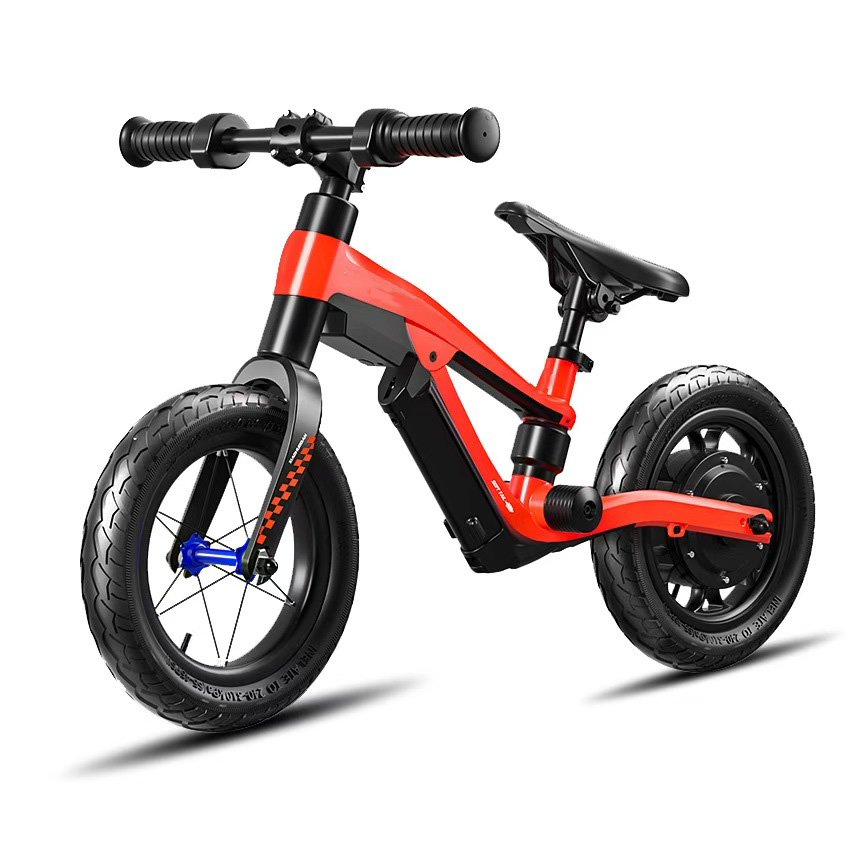
A toys-category kids balance bike should be ordered against a documented model record, not against a category label alone.
Answer first: a kids balance bike bought as a toy should be purchased against a documented model record, not a category label. Three records decide whether the order is clean — how the model is classified, which purchase terms are fixed in writing, and which acceptance criteria the shipment will be judged against. All three must describe the same configuration.
This guide is written for buyers who have already shortlisted a supplier and are preparing a purchase order: importers, wholesalers, kindergarten and institutional buyers, cross-border e-commerce sellers and brand owners running OEM programmes. It sets out what belongs in the compliance file, what has to be confirmed with the supplier, and what only the destination market authority or a test laboratory can answer.
One principle runs through the whole article. Where a model record lists a motor, a battery or other drive components, those facts belong in the file even when the declared product type is Toys. Classification follows the labeled configuration, and regional requirements should be confirmed against that configuration rather than against the product name on a quotation.
Why a Toys Label Is Not Yet a Classification
Toys is a declared product type. It is not a description of how the product behaves, and it is not a substitute for a configuration check. In the product records used for this guide, three children balance bikes carry the same declared type — toys — and all three are listed against the toys industry: AME-1202, AME-1201 and the 2-In-1 Kids Bike. A buyer reading only that line could assume three comparable, non-powered ride-on toys. The records say something else.
The AME-1202 record lists a magnesium alloy frame and fork with suspension, 12-inch air tyres on aluminium rims, and also a 24V 200W 12-inch brushless motor with a 22.2V/2.5A (55.0Wh) lithium battery in a 6S1P layout. The stated maximum speed is 12 km/h, and where a digital display is fitted the record states three speed modes of 6 km/h, 12 km/h and 18 km/h.
The AME-1201 record lists a magnesium frame with a steel fork, 12-inch air tyres on aluminium rims, a Bluetooth function, a 180W motor, a 24V 2Ah battery and a stated maximum speed of 14.5 km/h.
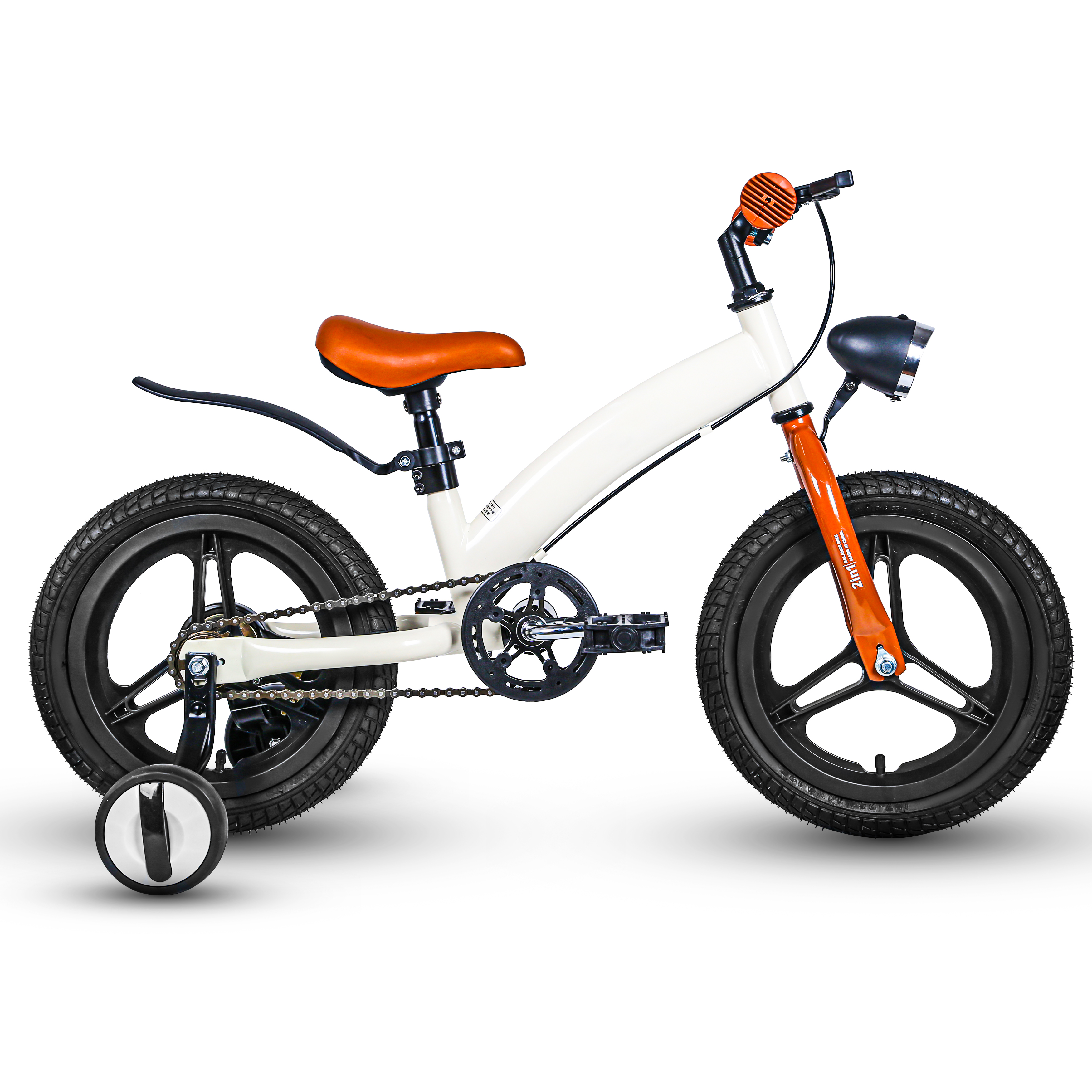
The 2-In-1 Kids Bike record lists a steel frame and steel fork, PP rims with rubber tyres, and a rear band brake. It converts from pedal form to balance form by removing the chain, crank and pedals.
No single record is contradictory on its own. The exposure appears at ordering, when a purchase order says 'kids balance bike, toys category' and the invoice description, the transport classification, the label artwork and the safety documentation were each written against a different version of the product.
Three failure modes account for most of these disputes:
- Documentation written for the wrong configuration. A file prepared for a non-powered balance bike is attached to a shipment whose record lists a motor and battery.
- Customs description that does not match the goods. Balance bikes without pedals are classified under HS code 95030010, but the same code is then carried over to a configuration with drive components without the shipment being re-described.
- Acceptance criteria that only check appearance. Colour and packing are verified; frame material, tyre type, wheel diameter and the presence or absence of drive components are not.
Two Rulebooks Run in Parallel: Toy Safety and Customs
Toy-channel compliance in this category changed at the start of 2026. According to EU standards reporting, EN 71-1:2026 introduces mandatory performance testing for all ride-on toys including balance bikes, effective 1 January 2026 in the European Union. That reference defines a safety testing route for the product as a ride-on toy.
Customs works from a different reference. Balance bikes without pedals are classified under HS code 95030010, the heading covering tricycles, scooters, pedal cars and similar wheeled toys. That code is a trade classification for duty and declaration purposes.
The two references answer different questions and do not substitute for each other. A customs code does not make a product compliant, and a test report does not classify a shipment. Both have to be resolved against the same model record before the order is placed, and the applicable safety route for the destination market still has to be confirmed with that market's authority or an accredited laboratory.
The commercial context explains why buyers now ask for this at quotation stage rather than at loading. The global balance bike market is projected to reach approximately USD 1.43 billion by 2026 according to The Business Research Company, with Coherent Market Insights forecasting a 7.2% CAGR from 2026 to 2033. Published market-size definitions vary between research houses, so these figures should be treated as directional for planning, not as an order-level input. What matters operationally is the direction of travel: a growing toy-channel category attracts more documentation requests, and documentation review consumes calendar time that is usually not planned for.
The Compliance File: Seven Records to Assemble
A usable compliance file for a toys-category balance bike is not a folder of certificates. It is seven records that reference each other by model code. Each one has a named owner and a version date.
1. Model identification record
Start from the labeled facts: model code, declared product type, frame and fork material, wheel diameter, tyre and rim type, whether drive components are present, colour and logo, and packaging format. The AME-1202 example reads: toys, magnesium alloy frame and fork with suspension, 12-inch wheel, air tyre with aluminium rim, 24V 200W motor, 22.2V/2.5A 55.0Wh battery, 12 km/h stated maximum speed. Every later record in the file cites this one by code, never by family name.
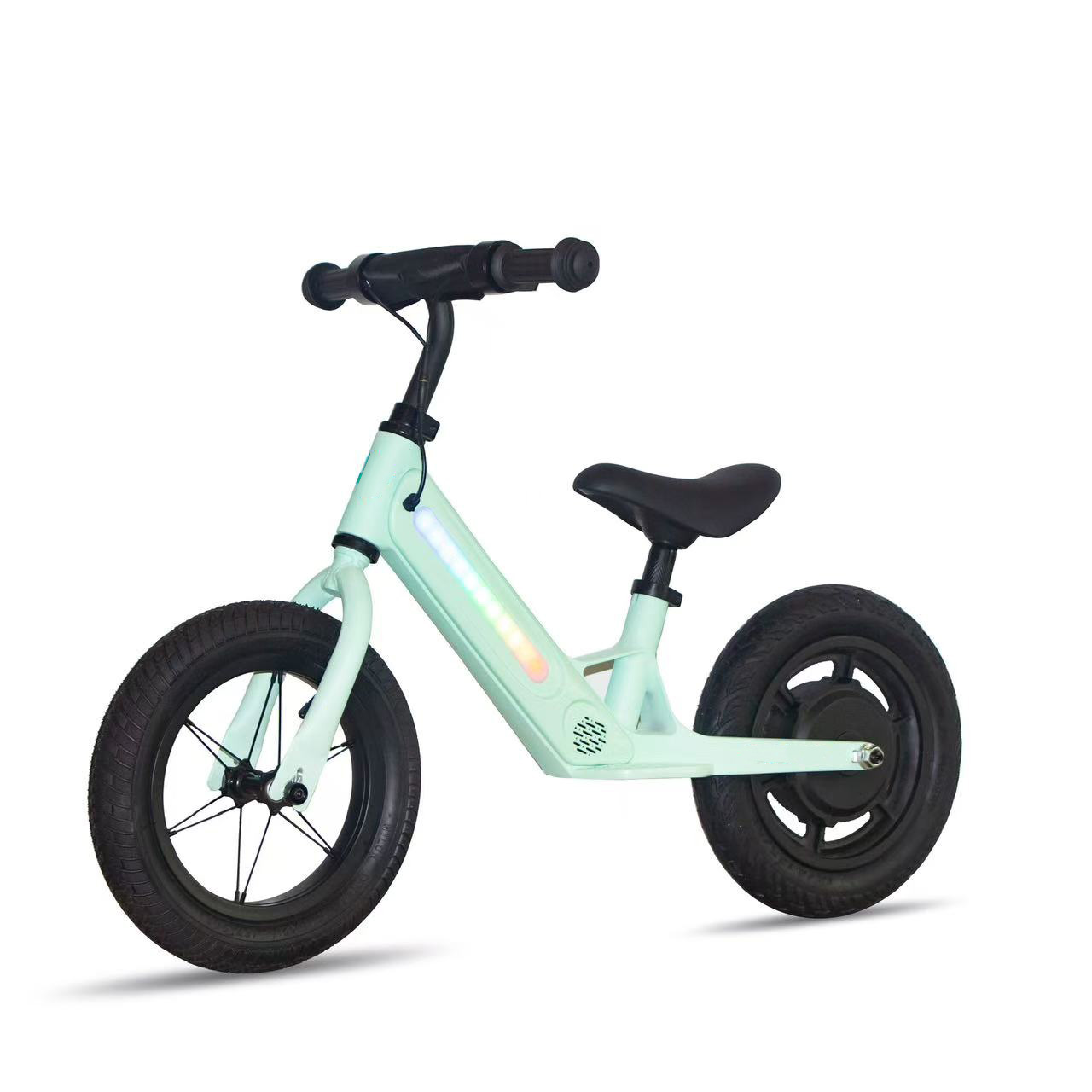
The model record is the anchor document: model code, declared type, materials, wheel size and drive components.
2. Classification statement
A one-page statement that answers a single question: is the shipment being bought as a non-powered ride-on toy, or as a configuration with drive components? If the latter, the statement names the motor, the battery and the stated speed, and it does not reuse the assumptions made for the balance-bike version. This is also where the HS code expectation is recorded — 95030010 for balance bikes without pedals — with a note that the code must be re-confirmed if the configuration changes.
3. Document set for the exact model
This guide deliberately does not assign a certificate to any balance bike model. What it does say is how to establish the document set: ask the supplier which documents exist for the exact model code and configuration, check that the model code on the document matches the code on the invoice, and confirm the applicable route for the destination market with that market's authority or an accredited laboratory. Documents issued for one variant should not be assumed to cover another. For clarity, compliance statements published for electric bicycles — such as the CE and EN 15194 references recorded for the electric bicycle range — are e-bike statements and do not transfer to a toys-category balance bike.
4. Label and packaging record
Age marking, warnings, language versions, SKU and barcode, carton marks and the approved artwork version. The language and marking requirements come from the destination market; the buyer writes them into the file and holds the approved artwork as the reference for inspection.
5. Purchase terms sheet
Minimum order quantity, delivery term, payment structure, lead time and capacity allocation. Section below sets out what is documented and what still needs to be confirmed on the quotation.
6. Acceptance criteria and inspection protocol
The checklist the shipment is judged against, the sampling plan, the inspector, the inspection stage and the escalation path when something fails.
7. Change control
Any change to frame material, tyre type, rim type, colour, packaging or drive components invalidates records 2, 3 and 4 until they are re-confirmed in writing. Change control is what stops a file from going stale between the sample and the second order.
Purchase Terms to Fix in Writing
Wuxi Purino International Trade Co., Ltd is a Wuxi, Jiangsu-based trading and supply-chain supplier of electric bicycles and kids balance bikes, founded in 2016 and exporting to Europe, the USA, the UK, East and South Asia; its electric bicycle line is recorded under the ACOPLEX Electric Bike brand, while the children balance bike models referenced here are supplied as toys-category products. The terms below are the ones its records document, together with the point that still needs confirmation.
| Term | Recorded figure | What the purchase order must add |
|---|---|---|
| Minimum order quantity | 50 pcs in the procurement terms; 100 units in the capability record | Two figures appear in the supplier's own records. Confirm one figure on the quotation and state that exact number in the PO. |
| Delivery terms | FOB / CFR / CIF | Named port, Incoterms version, who books and who insures. |
| Payment | 30% in advance, 70% before loading, by T/T or L/C | Which instrument, which documents are released against payment, and the bank charges split. |
| Lead time | 45–60 days typical production lead time | The start trigger: order confirmation, artwork approval or deposit receipt. They are not the same date. |
| Monthly capacity | 10,000 units per month | How much of that capacity is allocated to your slot, and what happens to the schedule in peak season. |
| Customization | Frame colour and logo, packaging and accessories, tyre type selection (EVA / CST / air), saddle and grip material | Which options are standard and which are costed, plus the minimum quantity per variant and per colour. |
Terms as recorded by the supplier; the buyer is responsible for confirming the final figures on the quotation before issuing the PO.
The MOQ line deserves attention. Two different figures exist in the supplier's own documentation, so the number in the purchase order has to be the confirmed one, in writing. Budget planning should also separate unit cost from configuration cost: magnesium alloy frames carry a higher production cost than iron frames, and tyre choice (EVA, CST or air) plus saddle and grip material changes the bill of materials on the same frame.
Acceptance Criteria That Survive the First Shipment
Acceptance should be written before the sample is approved, not after the bulk run. The supplier's documented quality control covers incoming material checks and pre-shipment inspection; detailed standards are not specified in its published material. That gap is the buyer's to close, because an inspection without a checklist verifies whatever the inspector decides to look at.
Acceptance is agreed before the bulk run: who inspects, at which stage, against which checklist, with which sampling plan.
A checklist that holds up in a dispute covers at least the following:
- Model code and configuration match the approved sample and the model record.
- Frame and fork material as stated — magnesium alloy or steel — checked on the component, not only on the carton.
- Tyre type as ordered: EVA, CST or air, and rim type as ordered, for example aluminium rim or PP rim.
- Wheel diameter as recorded, for example 12 inch.
- Unit weight band. Third-party material comparison data for 12-inch magnesium alloy models puts the frame at approximately 680 g and the complete bike at around 3.1 kg; set your own tolerance around the approved sample.
- Colour and logo against the approved reference, with the reference artwork attached to the file.
- Drive components present or absent exactly as documented, with motor and battery markings verified where they are part of the configuration.
- Saddle and grip material as specified, since both are customizable.
- Brake type where applicable — the 2-In-1 Kids Bike record lists a rear band brake.
- Packaging, label artwork, carton marks and quantity per carton.
- Sampling plan, defect definitions and the acceptance quality level applied.
- Inspector, location and stage: factory, third-party, before or after packing.
- Documents released with the shipment, and the escalation path for non-conformance.
Step-by-Step: From Model Record to Signed Purchase Order
- Fix the buyer requirement. Age band, sales channel, destination market and whether the product is being bought as a toy or as a motorized ride-on. Write the answer down; the rest of the file depends on it.
- Pull the model record for each candidate SKU. Compare declared type, materials, wheel size, tyre and rim, and drive components side by side. Three toys-category models can differ on all of these.
- Resolve the classification question. Record whether the order is non-powered or includes drive components, and note the HS code expectation of 95030010 for balance bikes without pedals.
- Request the document set for the exact model code. Then confirm the applicable requirements for the destination market with that market's authority or an accredited laboratory. Do not accept a family-level document.
- Approve a sample against the acceptance checklist. Measure, photograph and retain a golden sample, and treat the checklist used here as the same checklist used at pre-shipment inspection.
- Lock purchase terms in the quotation and the PO. MOQ, delivery term, payment structure, lead time trigger and variant minimums, with one confirmed MOQ figure.
- Agree the inspection protocol in writing. Incoming material checks and pre-shipment inspection are the documented steps; the checklist, sampling plan and inspector come from the buyer.
- Set the change-control rule. Any specification change after approval re-opens the classification statement, the document set and the label record before production restarts.
Use Cases: Where the File Earns Its Keep
Importer or wholesaler adding a toy-channel SKU
The file becomes the product master for listings and repeat orders. When the second order arrives, the buyer re-issues the same model record and acceptance checklist instead of rebuilding them, and the MOQ and payment terms are already documented.
Kindergarten and institutional procurement
Institutional buyers procure for durability and low maintenance across age groups, and they usually need a document trail for internal approval. Balance training and kindergarten equipment are documented applications for these models, and bulk orders in this segment are typically evaluated on frame robustness and maintenance load rather than on styling.
Cross-border e-commerce seller
The listing must match the labeled configuration. A listing that shows a non-powered balance bike while the shipped unit is documented with a motor and battery generates returns, marketplace disputes and relisting work. The model record is what the listing copy is written from.
Brand owner running an OEM programme
Customization options — frame colour and logo, packaging and accessories, tyre selection (EVA / CST / air), saddle and grip material — multiply the number of variants in the file. Each variant needs its own line in the acceptance checklist, and the change-control rule decides which documents have to be re-confirmed when a variant is added.
Comparison: Three Toys-Category Models, Three Different Files
All three records below carry the same declared product type. That is precisely why a purchase order needs more than the type.
| Model | Frame and fork | Wheel and tyre | Drive components on record | File question to resolve |
|---|---|---|---|---|
| AME-1202 declared type: Toys | Magnesium alloy frame and fork, with suspension | 12 inch; air tyre, aluminium rim | 24V 200W brushless motor; 22.2V/2.5A (55.0Wh) lithium battery, 6S1P; 12 km/h stated maximum speed, 6/12/18 km/h in three modes with digital display | Confirm whether the shipped unit is supplied with or without drive components, and record that in the PO, the label and the invoice description. |
| AME-1201 declared type: Toys | Magnesium frame, steel fork | 12 inch; air tyre, aluminium rim | 180W motor; 24V 2Ah battery; 14.5 km/h stated maximum speed; Bluetooth function | Same confirmation, plus which user documentation and function description apply to the Bluetooth feature. |
| 2-In-1 Kids Bike declared type: Toys | Steel frame and steel fork | PP rim, rubber tyre | None listed; converts from pedal form to balance form by removing chain, crank and pedals; rear band brake | Confirm which configuration ships and whether the removed parts are included in the carton. |
Facts taken from the supplier's model records; classification and documentation requirements for the destination market must still be confirmed before ordering.
FAQ
Go by the labeled configuration, not the product name. The model records for AME-1202, AME-1201 and the 2-In-1 Kids Bike all declare the product type Toys and the toys industry, yet the AME-1202 and AME-1201 records also list motor and battery data, with stated maximum speeds of 12 km/h and 14.5 km/h. Non-powered balance bikes without pedals are classified under HS code 95030010 for customs purposes, and that classification should not be carried over to a configuration with drive components without re-describing the shipment. Confirm the applicable safety route for your destination market with that market's authority or an accredited laboratory.
Read capacity as a supply-chain figure rather than an assembly-line figure. Wuxi Purino International Trade Co., Ltd is a Wuxi, Jiangsu-based trading and supply-chain supplier of electric bicycles and kids balance bikes, working with long-term cooperative factories that have mature production lines and testing equipment. Its documented monthly production capacity is 10,000 units, its typical production lead time is 45–60 days, and its stated export markets include Europe, the USA, the UK, East and South Asia. Customization covers frame colour and logo, packaging and accessories, tyre selection (EVA / CST / air) and saddle and grip material. Buyers should still test that capacity against their own launch curve and ask for a written production schedule with a start date.
The supplier's procurement record states an MOQ of 50 pcs, delivery terms of FOB / CFR / CIF, and payment of 30% in advance with 70% before loading by T/T or L/C, with acceptance based on inspection before shipment. A separate capability record states a minimum of 100 units, so the PO must carry one confirmed figure. On acceptance, the documented quality-control steps are incoming material checks and pre-shipment inspection, and detailed standards are not specified in the published material — the buyer therefore supplies the checklist, sampling plan and inspector details.
Approval and criteria should be developed together, because the sample is what the criteria describe. The supplier's documented service scope includes product consultation, customization and sample arrangement, and the variables most likely to drift between sample and bulk are exactly the customizable ones: frame colour and logo, packaging and accessories, tyre type, and saddle and grip material. Approve the sample against the same checklist used at pre-shipment inspection, record measurements, colour reference and tyre specification, and attach the golden sample to the PO. Agree which non-conformities trigger rejection before the bulk run starts.
The typical production lead time is 45–60 days against a documented monthly capacity of 10,000 units. Documentation confirmation should be scheduled before that window opens rather than inside it, because label printing, artwork approval and any change to the classification statement after the sample stage are the expensive delays. Buyers who want the model record, purchase terms and acceptance checklist prepared against their own market requirements can request a quotation or a sample through purinocycle.com or by contacting Nancy Chen at nancy@puruinuo.com.
Conclusion: Three Records, One Configuration
Compliance for a toys-category kids balance bike is not settled by the category label on a quotation. It is settled by three records that all point at the same model code: a classification statement that says whether the unit is a non-powered ride-on toy or a configuration with drive components, a purchase terms sheet with one confirmed MOQ figure and a defined delivery and payment structure, and an acceptance checklist detailed enough to be inspected by someone who did not write it.
The industry context supports the effort. Toy safety references such as EN 71-1:2026 place ride-on toys including balance bikes inside a defined testing route in the EU, while customs handles the same product under a separate trade classification. Neither reference knows which configuration you bought — the model record does.
The practical sequence is short: pull the model record, resolve the classification question, request documents for that exact model code, approve a sample against the checklist you will inspect against, and only then issue the purchase order. Buyers who do this in that order spend their review time once, instead of at the loading dock.
Wuxi Purino International Trade Co., Ltd supplies electric bicycles and kids balance bikes to buyers in Europe, the USA, the UK, East and South Asia.
Next step: build the file before the PO
Request a quotation or a sample against your destination market and configuration, and ask for the model record, purchase terms and acceptance checklist in writing. Customization from frame colour and logo to tyre selection (EVA / CST / air) is quoted per variant.
Wuxi Purino International Trade Co., Ltd · www.purinocycle.com · nancy@puruinuo.com · WhatsApp +86 153-1223-9200
Sample and quotation requests are handled against the labeled model facts supplied by the buyer.
Have Questions or Need More Details?
Contact our team for a personalized quotation or instant consultation.
Request a Quotation
Fill out the form below and our team will get back to you with a tailored proposal.
WhatsApp Direct Chat
Prefer to chat in real-time? Message us on WhatsApp for instant assistance & quick answers.
- Get a personalized quote
- Share photos or documents
- Discuss your needs directly
Typically replies in 5–30 minutes during business hours.