Kids Balance Bike Specs and Certification: What Buyers Verify Before Ordering
Sourcing a kids balance bike rarely fails on product appeal. It fails on constraints: which safety standard the destination market applies to the exact unit being imported, what the frame, fork and tyre specification actually contains, and whether the supplier can hold MOQ, lead time and documentation to the buyer's schedule. Buyers who resolve those three points early move through sample and deposit stages quickly. Buyers who leave them until the container is booked usually end up re-quoting the order.
This guide is written for importers, distributors, kindergarten procurement teams and private-label brand owners who are already past the discovery stage and need to make a specification decision. It uses the children's balance bike range supplied by Wuxi Purino International Trade Co., Ltd as a working example, and it keeps verified third-party market and standards data separate from supplier-specific specification facts so that each number can be traced.
Why Balance Bike Orders Stall: Three Constraints Buyers Underestimate
The three constraint failures below appear repeatedly in this category, and each one has a different fix.
1. Standard scope confusion. Balance bikes without pedals are described in trade terms as wheeled toys, so many buyers assume that a toy safety standard alone governs the product. In practice the standard that applies depends on what the unit actually is: a pedal-less ride-on, or a powered variant with a motor and battery. The two need different test scopes and different paperwork. A quotation that references one standard while the product is recorded against another will not survive a customs or retail-account documentation review, and the cost of correcting it lands on the buyer's schedule, not the supplier's.
2. Specification drift between quotation and container. Tyre type, rim material, fork material and brake type are the first items adjusted when a target cost has to be hit, and they are also the items most often left implicit in a quote. An order priced on an EVA tyre and shipped on an air tyre, or the reverse, changes both the landed cost and the maintenance profile for the buyer's channel. The fix is procedural: every one of those items should appear as a named line in the quotation.
3. Channel fit of MOQ, lead time and documentation. Institutional buyers, retail distributors and cross-border e-commerce sellers have very different tolerance for order volume and delivery windows. A 100-unit minimum with a 45-60 day production window suits a planned programme; it does not suit an urgent replenishment. Buyers who do not map minimum quantity and lead time onto their own replenishment cycle end up carrying either too much inventory or too little.
The Certification and Trade Context Behind Those Constraints
Four external reference points frame the constraint discussion for buyers planning 2026 programmes.
- Category scale. The global balance bike market is projected to reach approximately USD 1.43 billion by 2026, according to the balance bike market report published by The Business Research Company in September 2026.
- Growth trajectory. Coherent Market Insights forecasts a 7.2% CAGR for the balance bike market from 2026 to 2033, which is the growth rate most suppliers and buyers use for medium-term planning.
- Regulation. The EN 71-1:2026 standard introduces mandatory performance testing for all ride-on toys, including balance bikes, in the European Union, effective 1 January 2026. This is the change most likely to alter which documentation a European retail account will accept.
- Trade classification. Balance bikes without pedals are classified under HS Code 95030010, the customs heading that covers tricycles, scooters, pedal cars and similar wheeled toys. Buyers and freight forwarders should quote this code consistently, because it drives duty treatment and how the shipment is declared.
At the brand end of the market, Giant Bicycles and Trek Bicycle Corporation held an estimated 15% and 12% share of the kids bicycle market respectively in 2025, according to Fortune Business Insights. For buyers sourcing outside those two brands, the practical question is therefore not brand strength but specification and documentation control at the supplier level, which is where the constraints above are actually resolved.
On the material side, a frame material comparison published by Montasen in September 2026 reports that magnesium alloy integrated casting frames for balance bikes weigh approximately 680 g, with total bike weight around 3.1 kg. That figure is useful because frame weight is the variable that separates a bike a small child can lift independently from one they cannot.
How Wuxi Purino Configures Its Balance Bike Range
Wuxi Purino International Trade Co., Ltd is a trading and supply-chain enterprise based in Wuxi, Jiangsu Province, China, specialising in the export of electric bicycles, kids scooters, children's balance bikes and related components. Founded in 2016, the company operates from a 2,300 m² facility with 10 employees, exports 100% of its output to markets including the EU and the USA, and reports an annual output of 200,000 pcs supported by a three-engineer R&D team.
Its stated commercial position is relevant to the constraints above: monthly capacity of 10,000 units, an MOQ of 100 units and a production lead time of 45-60 days. Customisation covers frame colour and logo, packaging and accessories, tyre type selection (EVA, CST or air), and saddle and grip materials.
Frame material: magnesium alloy versus steel
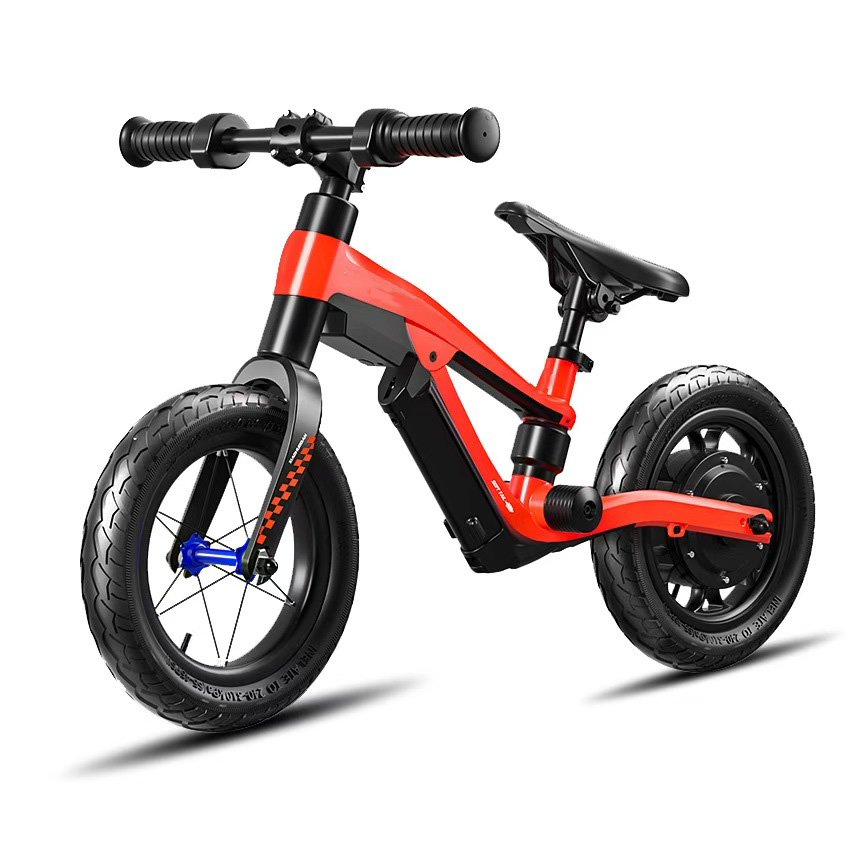
Two frame materials are specified across the current range. The AME-1201 pairs a magnesium frame with a steel fork. The AME-1202 uses magnesium alloy for both frame and fork and specifies suspension within that assembly. The 2-In-1 Kids Bike uses a steel frame and a steel fork.
What the choice buys in practice is weight and cost positioning. Magnesium alloy is the lighter option, and it is the specification buyers point to when the end customer is a parent looking for a bike a toddler can handle without help. Steel is the heavier, more cost-oriented option, and it sits behind the 2-In-1 convertible model. Aluminium appears in this range in a different role: the AME-1201 and AME-1202 both mount a 12-inch air tyre on an aluminium rim. Buyers who need an aluminium frame specifically should confirm the frame material as a written line item rather than inferring it from the rim description, because rim and frame are separate specifications on a quotation.
Tyre and rim: EVA, rubber and air
Tyre type is a separate decision from frame material, and it changes both ride feel and the maintenance load the buyer's channel has to absorb.
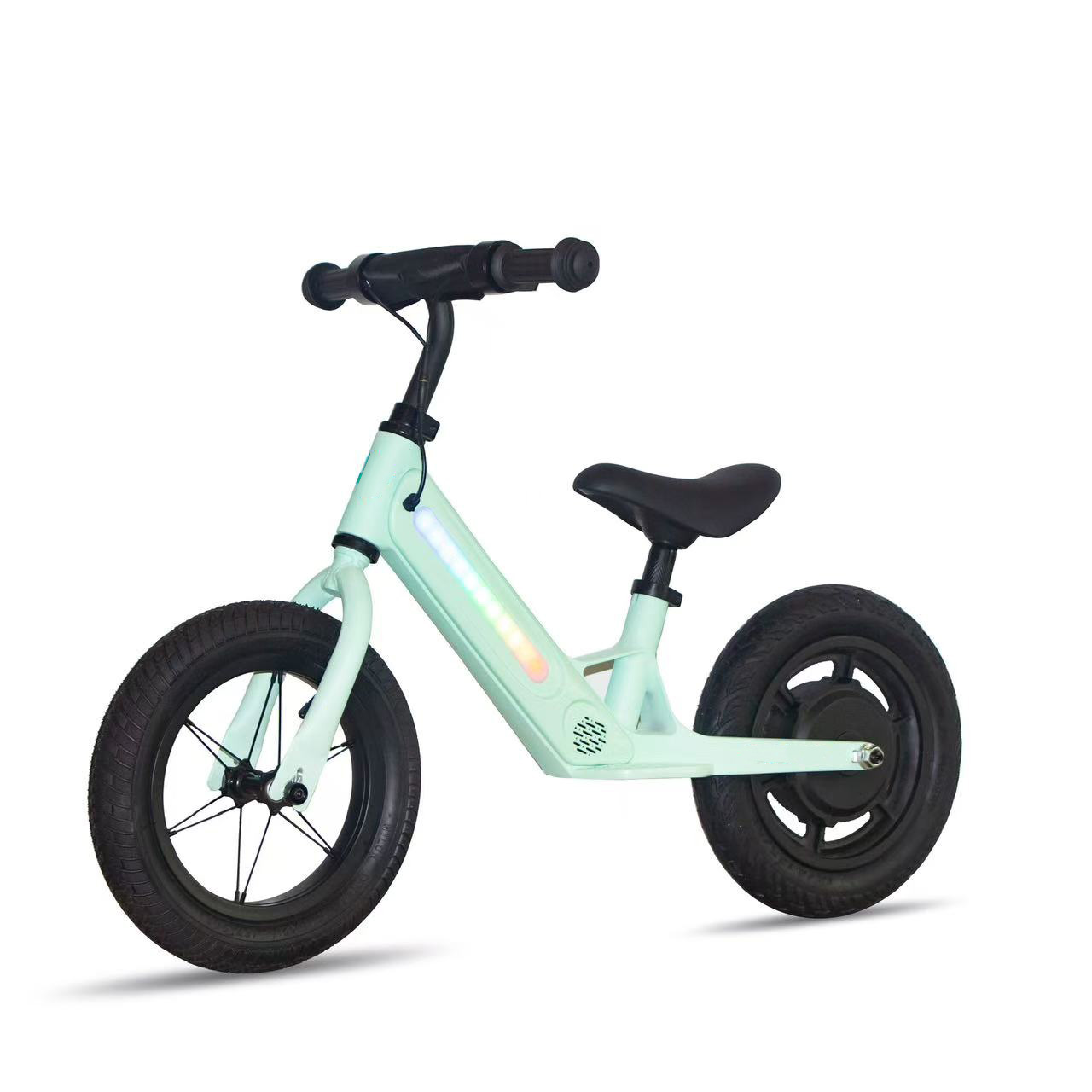
- Air tyre on aluminium rim - specified on the AME-1201 and AME-1202. This combination is positioned around shock absorption and smoother riding over uneven ground.
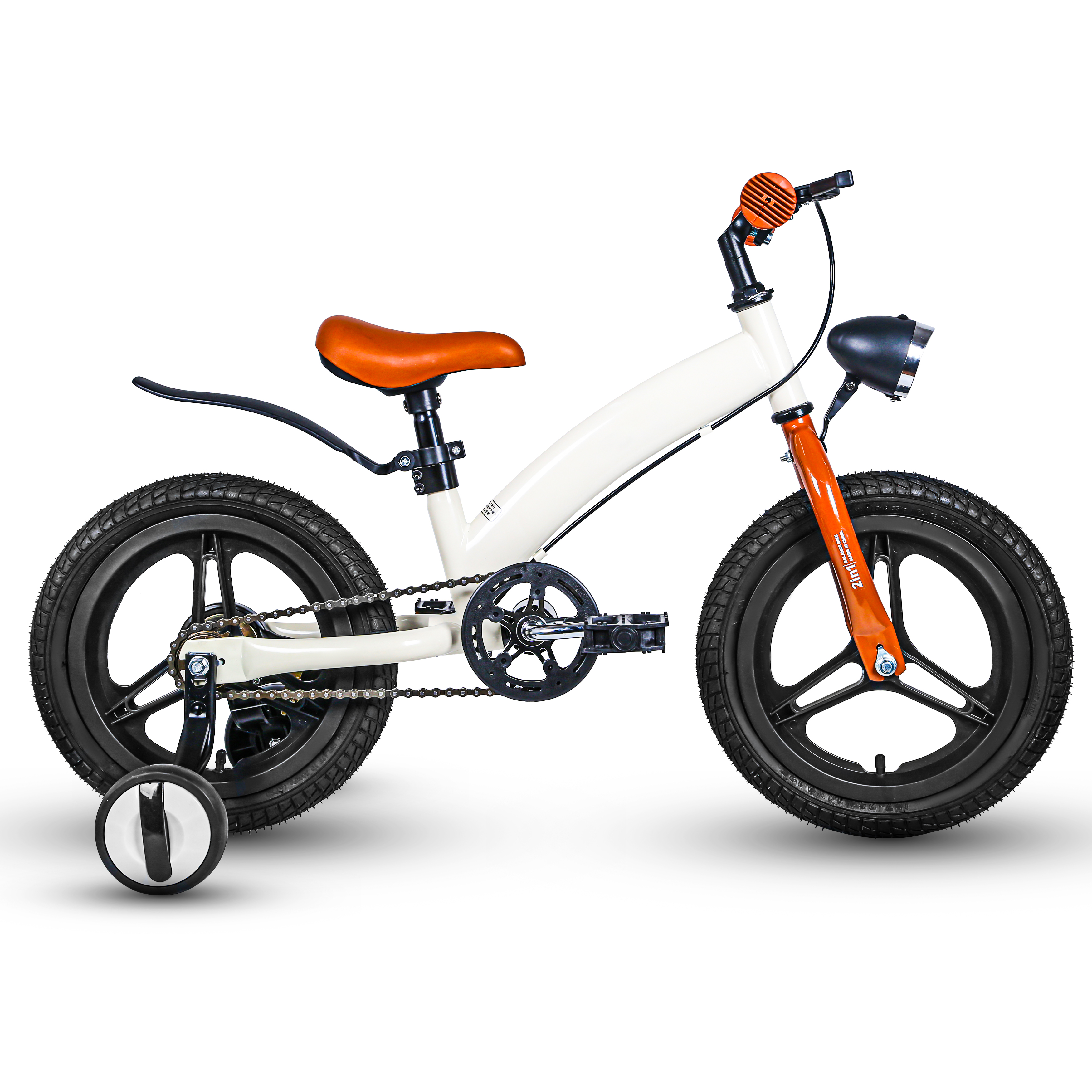
- PP rim with rubber tyre - specified on the 2-In-1 Kids Bike, described as wear-resistant and adaptable to various ground conditions.
- EVA - offered as a tyre selection option within the customisation scope. The supplier's case record pairs the steel-frame configuration with EVA tyres specifically for durability and cost advantage in bulk institutional orders.
EVA foam tyres do not require inflation, which is the practical reason they appear in institutional fleets where on-site maintenance capacity is limited. That same property is why they are usually the wrong choice when the sales story depends on ride comfort rather than on fleet uptime.
What the certification record actually covers
The certification position in this range is specific and worth reading line by line. The AME-1202 children balance bike is covered by EN 15194 certification. The certification type is CE, it is issued by TUV, it applies to the EU market, and the applicable standard recorded for that model is EN 15194, not EN 71.
The same certification record also covers the TRAVEL electric city bike, the ROCKET electric mountain bike and the UNICORN electric city bike, all under EN 15194 for the EU market. Two implications follow for buyers. First, if a market or retail account requires EN 71 documentation, raise it at the RFQ stage so the correct test scope is quoted rather than assumed. Second, match the standard to the model rather than to the category, because a pedal-less model and a motorised model in the same catalogue can carry different documentation.
Step-by-Step: Verifying a Balance Bike Order Before Deposit
This sequence is the order in which the constraints above can be closed without renegotiation later.
- Fix the standard scope for the destination market and the model class. In the EU, EN 71-1:2026 applies mandatory performance testing to ride-on toys including balance bikes from 1 January 2026. For the AME-1202, the standard on record is EN 15194, issued by TUV for the EU market. Confirm in writing which of these your market requires, per model.
- Write the specification as a line-item list, not as a description. Frame material, fork material, wheel diameter, tyre type, rim material, brake or drive system, headset, grips and surface treatment should each be one named line. For the AME-1202 that list reads: magnesium alloy frame and fork with suspension, 12-inch air tyre on aluminium rim, full powder coating, metal headset, TPR grips.
- Confirm classification and freight assumptions before comparing cost. Balance bikes without pedals ship under HS Code 95030010. The 2-In-1 Kids Bike is produced in 12, 14 and 16 inch sizes, and the supplier states that its high container loading capacity helps reduce ocean freight cost - which means the same model can land at a different cost per unit depending on how the container is loaded. Compare landed cost, not unit price alone.
- Validate the sample against the line-item list, not against the catalogue. Sample arrangement is part of the supplier's stated one-stop service, which runs from product selection and quotation through sample arrangement, production tracking, quality control and after-sales technical support.
- Ask what the quality documentation includes, and ask early.
- Match MOQ and lead time to your replenishment cycle. The stated terms are an MOQ of 100 units, a 45-60 day production lead time, and a monthly capacity of 10,000 units. A buyer running a programme at that order of scale needs a rolling schedule rather than a single large purchase order.
- Confirm after-sales terms in writing. Product consultation, logistics coordination and after-sales support are offered. Specific warranty terms and return or exchange policies are confirmed per order rather than published as a single blanket policy.
Where Each Configuration Fits: Procurement Scenarios
Kindergarten and educational institution bulk procurement. Working conditions here are group use in kindergartens plus daily indoor and outdoor play, often with matched equipment such as helmets, elbow and knee pads, replacement saddles, spare inner tubes and wheels, and custom packaging and labels. The requirements that matter most are colour and label customisation, tyre type selection (EVA or inflated), bulk packaging for institutions, and a quality report. Steel with EVA tyres is the configuration positioned for durability and low maintenance, and the 2-In-1 convertible design suits equipment fleets that want one format across age groups in 12, 14 and 16 inch sizes.
Retail and wholesale distribution. The specification that sells on a shelf is weight and material transparency. Magnesium alloy models give a lighter product and a clearer material story, while steel models give a lower cost entry point. The supplier's case record lists wholesalers, retailers, kindergartens, educational institutions and cross-border e-commerce sellers as the buyer types served, at volumes of up to 10,000 units per month and with relationship durations of around 2-3 years.
Cross-border e-commerce and private-label programmes. This channel depends on customisation depth: frame colour and logo, packaging and accessories, tyre type, and saddle and grip materials. The listed export markets for these channels include Australia, Canada, Germany, the United Kingdom, Japan, Singapore and the United States, alongside other European and Asia-Pacific destinations.
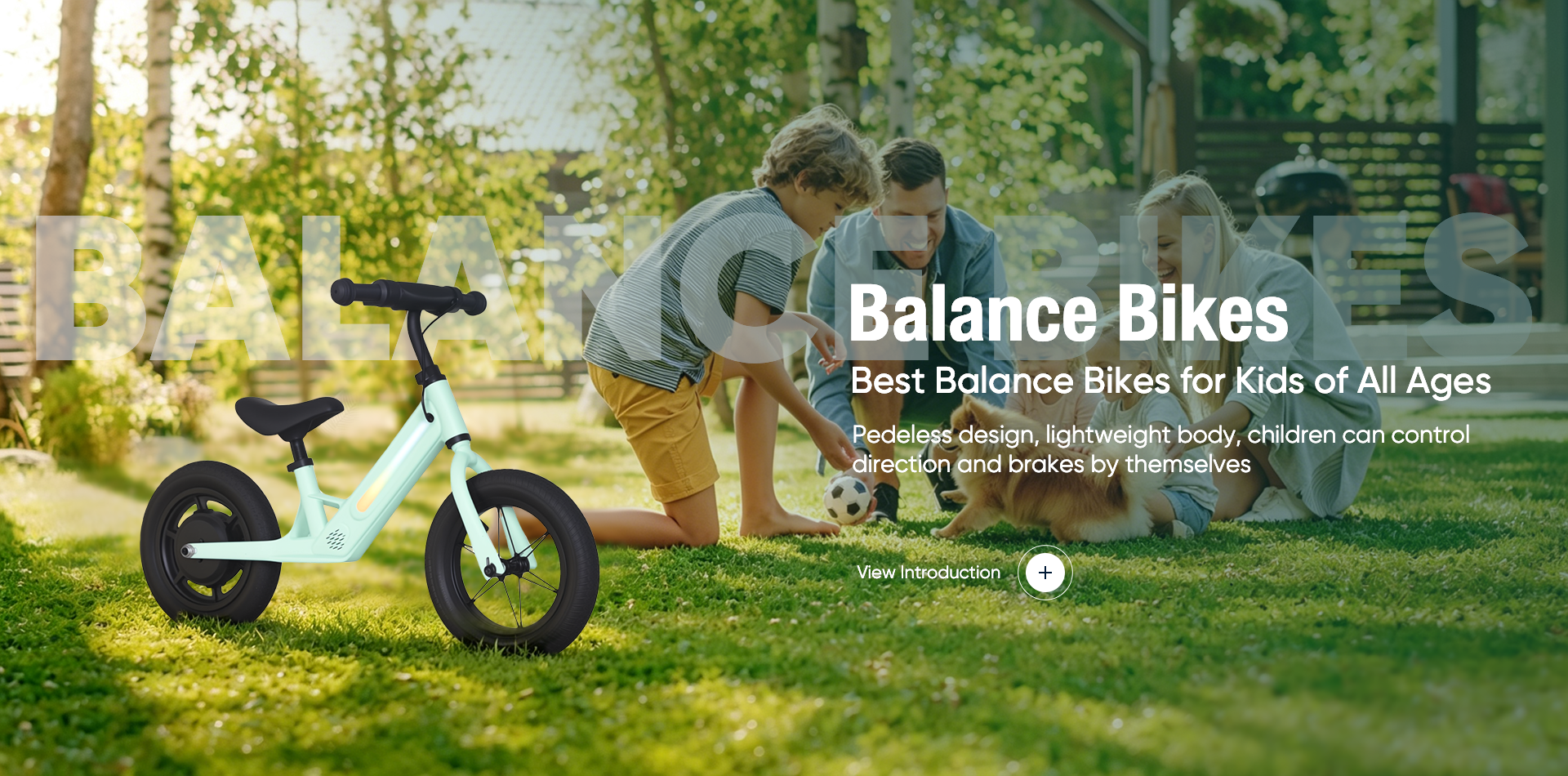
Across those channels, the supplier's case record describes the bikes as supporting children's balance and coordination development and remaining usable across growth stages, with bulk models selected for durability and low maintenance. The configurations behind that record are the 2-In-1 convertible design, lightweight magnesium alloy models, aluminium rims with CST inflated tyres, and steel frames with EVA tyres.
Model Comparison: AME-1202, AME-1201 and 2-In-1 Kids Bike
The table below lists only specifications that are published for each model. Blank cells mean the item is not specified in the available product data, not that it is absent from the product.
| Specification | AME-1202 | AME-1201 | 2-In-1 Kids Bike |
|---|---|---|---|
| Frame material | Magnesium alloy | Magnesium | Steel |
| Fork material | Magnesium alloy, with suspension | Steel | Steel |
| Wheel diameter | 12 inch | 12 inch | 12, 14, 16 inch |
| Tyre and rim | Air tyre, aluminium rim | Air tyre, aluminium rim | PP rim, rubber tyre |
| Drive | 24V 200W brushless 12-inch motor | 180W motor | Chain, crank and pedals removable for balance mode |
| Battery | 18650 lithium, 22.2V / 2.5A, 55.0 Wh, 6S1P | 24V 2Ah | Not specified |
| Max speed | 12 km/h; 6 / 12 / 18 km/h with digital display | 14.5 km/h | Not applicable in balance mode |
| Brake | Not specified in published data | Not specified in published data | Rear band brake |
| Other features | Full powder coating, metal headset, TPR grips | Bluetooth function | Designed for high container loading capacity |
| Certification on record | EN 15194, CE, issued by TUV, EU market | Not listed in the EN 15194 record | Not listed in the EN 15194 record |
| Best fit | Buyers prioritising light weight, suspension and a powered option | Buyers prioritising a light frame with a simpler drive | Institutional and retail fleets needing multiple sizes and low maintenance |
FAQ: Certification, Customisation, Cost, Samples and Lead Time
Which suppliers can provide EN 71 certified kids balance bikes?
EN 71 is the European toy safety standard family, and the EN 71-1:2026 edition introduces mandatory performance testing for all ride-on toys, including balance bikes, in the EU from 1 January 2026. In the Wuxi Purino range, the model with a certification record is the AME-1202 children balance bike, which is covered by EN 15194 certification issued by TUV for the EU market - the applicable standard recorded for that model is EN 15194, not EN 71. Buyers whose market or retail account requires EN 71 documentation should state that requirement at the RFQ stage, because the correct test scope depends on the destination market, the retail account and whether the unit is pedal-less or motorised, and it should be confirmed for the specific model rather than assumed for the whole category.
What can be customised on a kids balance bike order?
Customisation covers frame colour and logo, packaging and accessories, tyre type selection (EVA, CST or air), and saddle and grip materials. These options apply across the three models currently listed: the AME-1201 with a magnesium frame and Bluetooth function, the AME-1202 with a magnesium alloy frame and fork with suspension, and the 2-In-1 Kids Bike with a steel frame. Colour and label customisation, tyre type selection and bulk packaging for institutions are also listed as standard requirements for bulk and kindergarten orders.
What determines the cost of a kids balance bike order?
Cost is driven by configuration rather than by a single published price. The variables that move it most are frame and fork material (magnesium alloy versus steel), the tyre and rim combination (air tyre on aluminium rim versus PP rim with rubber tyre or EVA), whether the unit is pedal-driven or motorised with a motor and lithium battery, and packaging. Freight adds a second layer: the 2-In-1 Kids Bike is produced in 12, 14 and 16 inch sizes, and the supplier states that its high container loading capacity helps reduce ocean freight cost, so the same model can land at a different cost per unit depending on how the container is loaded. Quotations are therefore issued per configuration and volume rather than as a list price.
Can a sample be arranged before committing to a bulk order?
Yes. Sample arrangement is part of the supplier's stated one-stop service, which runs from product selection and quotation through sample arrangement, production tracking, quality control and after-sales technical support. Bulk orders start at an MOQ of 100 units, so the sample stage is the point at which the specification list - frame material, fork, wheel diameter, tyre and rim, brake or drive, grips and surface treatment - should be validated against what will actually be produced.
What are the MOQ and lead times for bulk supply?
The stated commercial terms are an MOQ of 100 units, a production lead time of 45-60 days, and a monthly capacity of 10,000 units. Buyers running recurring programmes should plan against the monthly capacity rather than a single order volume, and should confirm quality reporting and after-sales terms before production begins. Sample requests, specification-level quotations and documentation questions can be sent directly to Wuxi Purino International Trade Co., Ltd: nancy@puruinuo.com or +86 0510-88998686 (WhatsApp +86 153-1223-9200). The full product range is listed at https://www.purinocycle.com/.
Conclusion
Constraint management, not product marketing, is what keeps a balance bike order on schedule. Three checks do most of the work. Confirm which standard applies to the specific model and market - EN 15194 as recorded for the AME-1202, with any EN 71 requirement raised separately at the RFQ stage. Fix the frame, fork, tyre and rim specification as a written line-item list before the quotation is issued. Then map MOQ and lead time onto your own replenishment cycle rather than treating them as negotiation details.
Because the range spans a 12-inch magnesium alloy model with suspension (AME-1202), a magnesium-frame 12-inch model with Bluetooth function (AME-1201), and a steel-frame 2-in-1 convertible supplied in 12, 14 and 16 inch sizes, the specification conversation usually closes faster when the buyer opens with the use case - institutional fleet, retail shelf or private-label programme - instead of opening with a material.
Next Step
Request a sample, a configuration-level quotation, or the documentation set for your destination market. Wuxi Purino International Trade Co., Ltd (ACOPLEX Electric Bike) - nancy@puruinuo.com - +86 0510-88998686.
Have Questions or Need More Details?
Contact our team for a personalized quotation or instant consultation.
Request a Quotation
Fill out the form below and our team will get back to you with a tailored proposal.
WhatsApp Direct Chat
Prefer to chat in real-time? Message us on WhatsApp for instant assistance & quick answers.
- Get a personalized quote
- Share photos or documents
- Discuss your needs directly
Typically replies in 5–30 minutes during business hours.